Sunday, February 22, 2009

#71 Mythology - Conversations with Richard Roberts, part 1

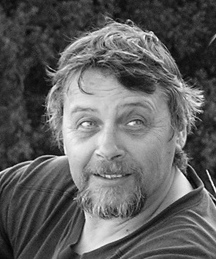
Today, we are starting a series of conversations with an author, a poet, a Tarot scholar and a mythologist Richard Roberts.

In the 1960s, Alan Watts presented Roberts with a letter of introduction to Joseph Campbell, which led to a 20-year mentorship with the famed scholar of mythology – a partnership which included collaborating in seminars and writing books, and which lasted through the remainder of Campbell’s life.

In his college days, Roberts had vowed never to write a novel until he had an idea no writer before him ever had. In a vision, he conceived of a book in which his characters would “go into” other literary classics and interact with the characters, all the while writing in the style of the original authors of those classics. Roberts regards the resulting book, The Wind & The Wizard, as his life’s masterwork.

In this episode, Richard Roberts describes how he came to meet Joseph Campbell and the related part of his life and work at the time.

  • Alan Watts and “the Hero with a 1000 faces”
    • Richard came to California in 1956 – always carrying J. Campbell’s book, even to the beach
    • Alan gave him a letter of introduction to J. Campbell
  • Meeting with the mentor Joseph Campbell
    • At the athletic club, running around the track
    • That evening Joseph’s wife was returning from a world’s tour of her dance version of “Finnigan’s Wake”
    • After running around the track, Richard and Joseph went to the bar, and after a few drinks became friends for life
    • “Waiting for the Goddess to unlock the waters”
  • Joe stays over and Henrich Zimmer is introduced
    • Richard lets Joseph stay in his apartment in San Francisco for his Bay Area trip. Joseph later ships two boxes of books by Henrich Zimmer on Indian art and civilization to Richard as a thank you gift. These books furthered Richard’s interest in gnosticism.
  • Joe and The Major Arcana Tarot
    • Joe was shown a deck of Tarot cards that he saw last time in 1940s at his friend’s Henrich Zimmer, who apparently was a Tarot scholar as well.
    • Richard was also given a deck of cards that were alchemical in nature.
    • They later began to correspond about arrangements of the Major Arcana
  • Gnostic Traditions, Jane Roberts & Nag Hamadi Library
    • In 1972 the book “Seth Speaks” came out (Jane Roberts).
    • Aug 11, 1971 – last session of Seth. Christ was not crusified – it was a conspiracy.
  • Laughing Jesus and Joe Campbell
    • “A Seth Reader” book by Richard
    • Joe read “A Seth Reader” and said, “I think this is how the Universe works”

[techtags: Richard Roberts, Joseph Campbell, Hero with a 1000 Faces, Alan Watts, Tarot, Seth Speaks, Nag Hamadi Library]

Sunday, February 15, 2009

#70 Reframing

Reframing (Wikipedia) – Another meaning or another sense is assigned by reframing a situation or context, thus sees a situation in another frame. A frame can refer to a belief, what limits our view of the world. If we let this limiting belief go, new conceptions and interpretation possibilities can develop.

This episode is framed by the following topics:

  • What is reframing?
    • Changing the frame
    • Changing the way you look at it
  • Examples of reframes
  • Where reframes are useful?
    • Business: it’s not the best product that wins, but the one that communicates the best
    • Relationships: Freedom to change my or other’s perspective
    • Getting unstuck
  • Structure of reframing
    • Content reframing
    • Context reframing
    • 6-step reframing
  • Reframing in personal growth
    • Midlife crisis – getting laid off and starting out from scratch
    • Real example – someone survived a car and plane crash, got paralysed and burned, and ran for the senate
    • “Murderball” – a documentary on quadruplegics playing professional wheel-chair version of football
  • Reframing in relationships
  • Reframing in organizations

Sunday, February 8, 2009

#69 Archetypes crossing - Paratheatre with Antero Alli, part 3 - How toBegin

Antero Alli

We are continuing the series of conversations with Antero Alli on an experiential medium called ParaTheatre. To have a better understanding of the context, and for the introduction of the speakers, please refer to the first talk in the series.


In this episode, we touch upon the following topics:

  • ParaTheatre – how to start
  • Qualities needed for this work
  • Flexibility of ego
    • Ego as a self-image. Fixed ego is an attempt to preserve this self-image. Flexible ego is the ability to be at home with both self-image and its opposite.
    • Polarization technique as a way to support flexible ego
    • Flexible ego is the same as a strong ego; as opposed to big ego.
  • On thinking before acting
  • Existing conditions
    • Dealing with things that come up
    • Antero’s example – escaing INTO reality, instead of away from it
  • Keeping a journal
  • Talking with our bodies
    • We are continually sending signals
    • Becoming more conscious of these signals, and allowing their expression without the constant need to evaluate the appropriateness of your actions, as you would in a typical social context
    • Exploration of unfamiliar; creativity
  • Codification project
  • (Not) Mythologizing Archetypes
  • No-form – nothing special
  • No-form “conversion” period
  • ParaTheatre from books
  • Finding a language
    • And how weird it may look for an uninitiated observer

Wednesday, February 4, 2009

Radix Omnium Malorum Avaritia

Originally on my Web site I posted something similar to the following:

Whereas an interest in one’s philosophical foundation seems these days to surrender to sound bites, simple rhetoric, and ideology, it is still an imperative when discussing human capital sustainability. Therefore, I shall divide the issue into three axes, each with diametric opposites at either end. These axes are love – greed, connection – isolation, and life – death, and are illustrated in the figure below:

Sunday, February 1, 2009

#68 Archetypes crossing - Paratheatre with Antero Alli, part 2 - TheMajor Elements

Antero Alli

We are continuing the series of conversations with Antero Alli on an experiential medium called ParaTheatre. To have a better understanding of the context, and for the introduction of the speakers, please refer to the first talk in the series.


In this episode, we touch upon the following topics:

  • Relationship to Space
    • The very first ritual – entering the room
    • Territorial instinct
    • Relationship to space and no-form
  • Verticality
    • Virtical vs. Horisontal attention
  • Asocial Intent
    • To avoid the burden of social considerations – approval, attraction, wanting to beat up someone, etc.
    • Not the same as anti-social (meaning “hostile”); instead, re-focused on relation to space around people
    • Allows for connection to “verticality”
    • Interaction with other people becomes from the place of offering, where one’s needs are already met by the connection to the vertical sources. The interactions become more authentic; you present yourself as you are, not as you want them to see you. You are not losing yourself in the other person. In contrast, most social interactions are based on meeting the needs, “what can I get from you”, and very little vertical connection.
  • Feeling the body deeply
    • ParaTheatre as a medium for triggering visions
    • Feeling the body deeply to find the visions / images that are
  • Direct Experience
    • Choice of what to be true to
    • Ritual is not solving the conflict, but exposing the conflict, and interacting with it as the energy source for movement
  • The Force of Commitment
    • Your capacity for follow-through
    • Commitment always determines the quality of the result, in anything you do.
    • Increasing the force of commitment
    • Fear (of inadequacy) is where commitment is most required. Fear is the beginning stage of converting fears into commitments.
  • Integrity Point

Sunday, January 25, 2009

#67 Archetypes crossing - Paratheatre with Antero Alli, part 1 -Introduction

Antero AlliToday we are starting another series of conversations with Antero Alli on an experiential medium called ParaTheatre.

Antero has been producing work in various mediums of theatre and
paratheatre since 1977 and, experimental video documents and feature
fiction films since 1993.

His paratheatre work is documented in his book, “Towards an Archeology
of the Soul” and in his videos “CRUX”, “Archaic Community” and “Orphans of Delirium”. Alli’s 2005 docufiction feature, “The Greater
Circulation”, incoporates a paratheatre performance in a critically
acclaimed cinematic treatment of poet Rainer Maria Rilke’s “Requiem
for a Friend”. His recent experimental feature, “The Invisible Forest” was inspired by the ideas of French Surrealist playwright/actor,
Antonin Artaud.

Twice a year, he facilitates paratheatre labs in Berkeley, California
with each lab having a focus on rituals based on specific themes, like
movements recalled from dreams, beginer’s mind, and others.

In this first episode, we touch upon the following topics:

  • What is ParaTheatre?
  • Reasons to do ParaTheatre
    • To get high, to get in a certain state of consciousness
    • Spiritual reasons, self-healing in a way. Experience communion with minimal interference of one’s beliefs, conceptions, ideas.
    • To stay honest to one’s impulses, get in touch with spontaneity, flexibility of ego
    • To induce visions: it’s a process of entering of feeling my body deeply; releasing energies that are trapped in my body, committing fully to the expression of those energies, and releasing images that have been trapped in the body with these energies.
    • Performance arts people enter because they’ve got into a rut of repetition, to let their talent take over
    • As a yoga: a physically intensive discipline with mind attention and intention and focus
    • Those who have outgrown the hedonic motivation, the need to get high, move to circuit 6 in a way
    • People who approach it more like a worship, more like a 7th circuit
  • What is a ritual?
  • Ritual as initiatic experience
    • Cultivate greater receptivity to the unknown
  • Ritual Process
  • Group Circle
    • Talk about what happened
    • Let off steam
    • Begin psychological intergation of pre- or post-verbal experiences

Friday, January 23, 2009

Osho's Code

I have finished reading “Autobiography of a Spiritually Incorrect Mystic” by Osho. What a beautiful and intelligent man. An agent of radical change. As usual, I modeled him as I read, so here is his code (see below for a short intro to modeling):

  1. I am not going to tolerate anything that is wrong to my conscience.
  2. God is not a thing but a process.
  3. Everything belongs to me.
  4. Whatsoever the consequences, I am not going to be deviated from myself.
  5. Don’t give me advice, – I want to learn on my own, – life has to be learned through trial & error.
  6. If I accept death, there is no fear. Only life creates worry.
  7. I am not here, I am a nobody, nothingness.
  8. Never to allow an unintelligent thing to be imposed upon me, to fight against all kinds of stupidities, whatsoever the consequences. Be rational, logical to the very end.
  9. Be more and more alert, so I don’t end up being just intellectual.
  10. When I do something, I do it to the very end.
  11. What is gone is gone, – I never look back.
  12. I am not a man who can be stopped.
  13. I am satisfied with something very simple – the very best of things.

Modeling forms the heart of NLP. It is a process of extracting the recipe, the blueprint behind repeatable success. Such recipe typically consists of patterns of beliefs, psychosomatic states and specific behaviors. When modeling from a book, only beliefs are visible (the other two require being with the person), so that is what I have listed above.