Sunday, January 25, 2009

#67 Archetypes crossing - Paratheatre with Antero Alli, part 1 -Introduction

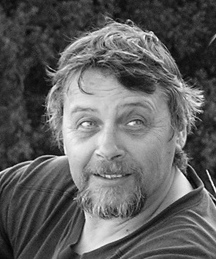
Antero AlliToday we are starting another series of conversations with Antero Alli on an experiential medium called ParaTheatre.

Antero has been producing work in various mediums of theatre and
paratheatre since 1977 and, experimental video documents and feature
fiction films since 1993.

His paratheatre work is documented in his book, “Towards an Archeology
of the Soul” and in his videos “CRUX”, “Archaic Community” and “Orphans of Delirium”. Alli’s 2005 docufiction feature, “The Greater
Circulation”, incoporates a paratheatre performance in a critically
acclaimed cinematic treatment of poet Rainer Maria Rilke’s “Requiem
for a Friend”. His recent experimental feature, “The Invisible Forest” was inspired by the ideas of French Surrealist playwright/actor,
Antonin Artaud.

Twice a year, he facilitates paratheatre labs in Berkeley, California
with each lab having a focus on rituals based on specific themes, like
movements recalled from dreams, beginer’s mind, and others.

In this first episode, we touch upon the following topics:

  • What is ParaTheatre?
  • Reasons to do ParaTheatre
    • To get high, to get in a certain state of consciousness
    • Spiritual reasons, self-healing in a way. Experience communion with minimal interference of one’s beliefs, conceptions, ideas.
    • To stay honest to one’s impulses, get in touch with spontaneity, flexibility of ego
    • To induce visions: it’s a process of entering of feeling my body deeply; releasing energies that are trapped in my body, committing fully to the expression of those energies, and releasing images that have been trapped in the body with these energies.
    • Performance arts people enter because they’ve got into a rut of repetition, to let their talent take over
    • As a yoga: a physically intensive discipline with mind attention and intention and focus
    • Those who have outgrown the hedonic motivation, the need to get high, move to circuit 6 in a way
    • People who approach it more like a worship, more like a 7th circuit
  • What is a ritual?
  • Ritual as initiatic experience
    • Cultivate greater receptivity to the unknown
  • Ritual Process
  • Group Circle
    • Talk about what happened
    • Let off steam
    • Begin psychological intergation of pre- or post-verbal experiences

Friday, January 23, 2009

Osho's Code

I have finished reading “Autobiography of a Spiritually Incorrect Mystic” by Osho. What a beautiful and intelligent man. An agent of radical change. As usual, I modeled him as I read, so here is his code (see below for a short intro to modeling):

  1. I am not going to tolerate anything that is wrong to my conscience.
  2. God is not a thing but a process.
  3. Everything belongs to me.
  4. Whatsoever the consequences, I am not going to be deviated from myself.
  5. Don’t give me advice, – I want to learn on my own, – life has to be learned through trial & error.
  6. If I accept death, there is no fear. Only life creates worry.
  7. I am not here, I am a nobody, nothingness.
  8. Never to allow an unintelligent thing to be imposed upon me, to fight against all kinds of stupidities, whatsoever the consequences. Be rational, logical to the very end.
  9. Be more and more alert, so I don’t end up being just intellectual.
  10. When I do something, I do it to the very end.
  11. What is gone is gone, – I never look back.
  12. I am not a man who can be stopped.
  13. I am satisfied with something very simple – the very best of things.

Modeling forms the heart of NLP. It is a process of extracting the recipe, the blueprint behind repeatable success. Such recipe typically consists of patterns of beliefs, psychosomatic states and specific behaviors. When modeling from a book, only beliefs are visible (the other two require being with the person), so that is what I have listed above.

Sunday, January 18, 2009

#66 Leading the Change - Catalyst and Enzyme, part 2

In the previous talk, we have explored the difference between being a catalyst and an enzyme of change. In this episode, we continue our discussion, and move it into the realm of personal stories, experiences, and learnings.

In this talk, we cover the following topics:

  • Personal stories
    • Learning NLP
    • Relationships and jealousy
    • Changes in business
  • Switching from catalyst to enzyme, and from enzyme to catalyst

[techtags: Change, Transformation, Catalyst, Enzyme, Structural Change, Deming]

Friday, January 16, 2009

Waking Life - An Adventure in The Mind, Body, Spirit

This is a very very good movie, something to chew on many times over. Watch it, and BUY IT!!
It is a movie you want to keep, and an artist/movie maker you want to support
http://www.amazon.com/Waking-Life-Ethan-Hawke/dp/B00005YU1O

A boy has a dream that he can float, but unless he holds on, he will drift away into the sky. Even when he is grown up, this idea recurs. After a strange accident, he walks through what may be a dream, flowing in and out of scenarios and encountering various characters. People he meets discuss science, philosophy and the life of dreaming and waking, and the protagonist gradually becomes alarmed that he cannot awake from this confusing dream

,

Thursday, January 15, 2009

the Belief in scarcity leads to Coercion

“Scarcity has always been imposed upon the community to serve the interests of those in control. Scarcity has been maintained by the system of organization so as to perpetuate inequity in service of the privileged. Privilege requires coercion; coercion is justified on the basis of scarcity. In the absence of coercion and in the presence of scarcity is the actuality ‘war if each against all’. So scarcity has always been jealously guarded as a justification for the use of force. The use of force requires social acquiescence if it is to have persistence as a means of control. But availability of resources is limited only by the poverty of ideas.

…

If you doubt this, consider the fact that the mutual convertibility of the elements means that all things are available everywhere; what is lacking are the ideas about how to get at those things. And this general principle applies not only to this extreme case. Ideas have always been controlled for the benefit of the few: the chief, the shaman, the God-king, the priesthood, the lord, … the power elite. It is in the control of ideas that we find the source of scarcity, and hence the justification of coercion.”

– an excerpt from “The Moon of Hoa Binh” by Cong Huen Ton Nu Nha Trang and William Pensinger.

Monday, January 12, 2009

"Are You Out Of Your Mind?"

“Believe me when I say we have a difficult time ahead of us. But if we are to be prepared for it, we must first shed our fear of it. I stand here, before you now, truthfully unafraid. Why? Because I believe something you do not? No, I stand here without fear because I remember. I remember that I am here not because of the path that lies before me but because of the path that lies behind me. I remember that for 100 years we have fought these machines. I remember that for 100 years they have sent their armies to destroy us, and after a century of war I remember that which matters most… We are still here! Today, let us send a message to that army. Tonight, let us shake this cave. Tonight, let us tremble these halls of earth, steel, and stone, let us be heard from red core to black sky. Tonight, let us make them remember.” And the drums beat and dancing begins

– Morpheus In Matrix Reloaded before the cave explodes into
the ecstatic dance

Sunday, January 11, 2009

#65 Leading the Change - Catalyst and Enzyme, part 1

We’ve all heard the phrase – “being the catalyst of change or transformation.” But have we really thought of the implications of this metaphor, and how often do we consider the alternatives?

  • Change – the process of becoming different (Wikipedia)
  • [Catalyst] is a substance that increases the rate of reaction without being consumed by the reaction (Wikipedia)
  • Enzymes are biomolecules that catalyze chemical reactions. As with all catalysts, enzymes are not consumed by the reactions they catalyze, nor do they alter the equilibrium of these reactions. However, enzymes do differ from most other catalysts by being much more specific. (Wikipedia)
  • Coenzymes are small organic molecules that transport chemical groups from one enzyme to another. […] Coenzymes are chemically changed as a consequence of enzyme action. (Wikipedia)

In this talk, we cover the following topics:

  • Why studying change is so crucial?
    • Either you live in a rut and eventually die, or live a full life. And to live a full life, you better study change.
    • You are always changing – whether you want it or not. The question is only, do you want to take the reins of your transformation into
      your own hands, or not?
    • “Change is the only constant” – and Deming added “you don’t have to change. Survival is optional.”
    • It’s in the moments of change fortunes are made and lost;
    • It’s in the moments of change you either survive or die;
    • It’s in leading these changes that great shifts happen.
    • It’s knowing the waves of change enables you to ride with the change, if not lead it
    • Like in surfing, if you calibrate it right, you ride the wave. But if you misjudge it, you go underwater.
  • Kinds of change
    • Cyclical and Structural change
    • How do you know a priori what kind of change it is?
  • Catalyst and Enzyme
    • When leading change, what primary behavior you are demonstrating?
    • Are you putting yourself on the line and changing with it, or simply observing the change on the outside?
    • As in language – are you a verb or a noun (nominalization)?
  • Contexts for being enzyme or catalyst
    • When it’s appropriate to be one or the other; sequencing

[techtags: Change, Transformation, Catalyst, Enzyme, Structural Change, Deming]